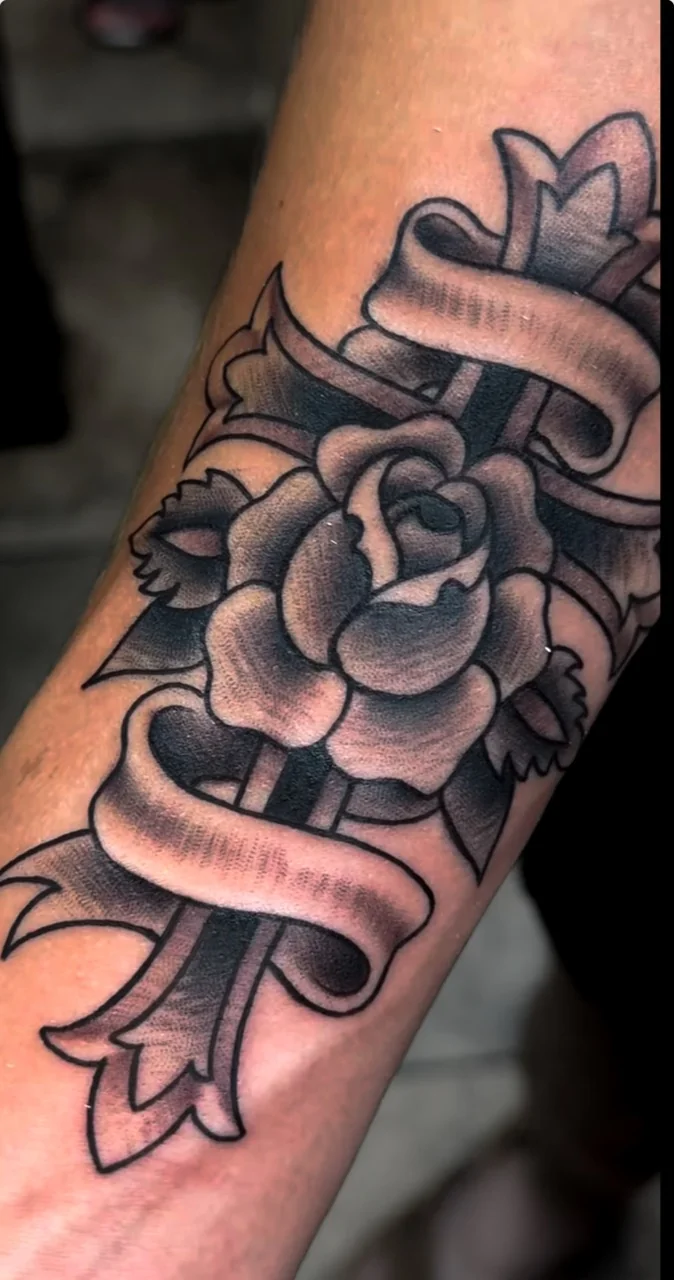
Inner Forearm
The inner forearm offers a flatter viewing surface and can feel more personal because the design often faces you. Meanwhile, softer skin and nearby sensitive areas may change the sensation during the session.


PLACEMENT • DESIGN FLOW • FOUR SAN ANTONIO SHOPS
Forearm tattoos in San Antonio can work well when the design fits your arm and your daily life. The forearm gives artists useful space for readable artwork, body flow and future expansion. However, the best result still depends on choosing the correct side, scale, orientation and artist for your design.
THE SHORT ANSWER
Yes. The forearm is a versatile placement because it offers a long, visible canvas that can support small designs, medium statement pieces or artwork that may later connect into a sleeve.
Therefore, the artist should test the design around your natural width, wrist taper, elbow movement and viewing angle before the stencil is approved.
A FLEXIBLE BODY AREA
First, the forearm has enough length to create direction. An artist can build a vertical composition from wrist to elbow, center a smaller subject or use the arm's curve to carry lettering and ornament.
Also, much of the area is easy to view during planning. That visibility helps you compare stencil size, balance and orientation before tattooing begins.
However, every forearm is different. Muscle shape, wrist width, existing tattoos and the way your arm rests can change the ideal layout. As a result, a design that looks balanced on a screen may need reshaping on your body.
Review the Tattoo Size Guide, then let the artist make the final scale decision in person.
COMPARE THE MAIN SURFACES
The inner forearm offers a flatter viewing surface and can feel more personal because the design often faces you. Meanwhile, softer skin and nearby sensitive areas may change the sensation during the session.
The outer forearm is highly visible to other people and often supports strong silhouettes. In addition, its shape can connect naturally toward the upper arm when you may want a future sleeve.
Neither side is automatically better. Instead, choose based on who should see the tattoo most often, how the subject should face and whether you plan to expand the composition.
For wraparound artwork, the artist may use both surfaces. Therefore, approve the stencil from the front, side and back rather than judging only one photograph.
PROTECT THE IMPORTANT DETAILS
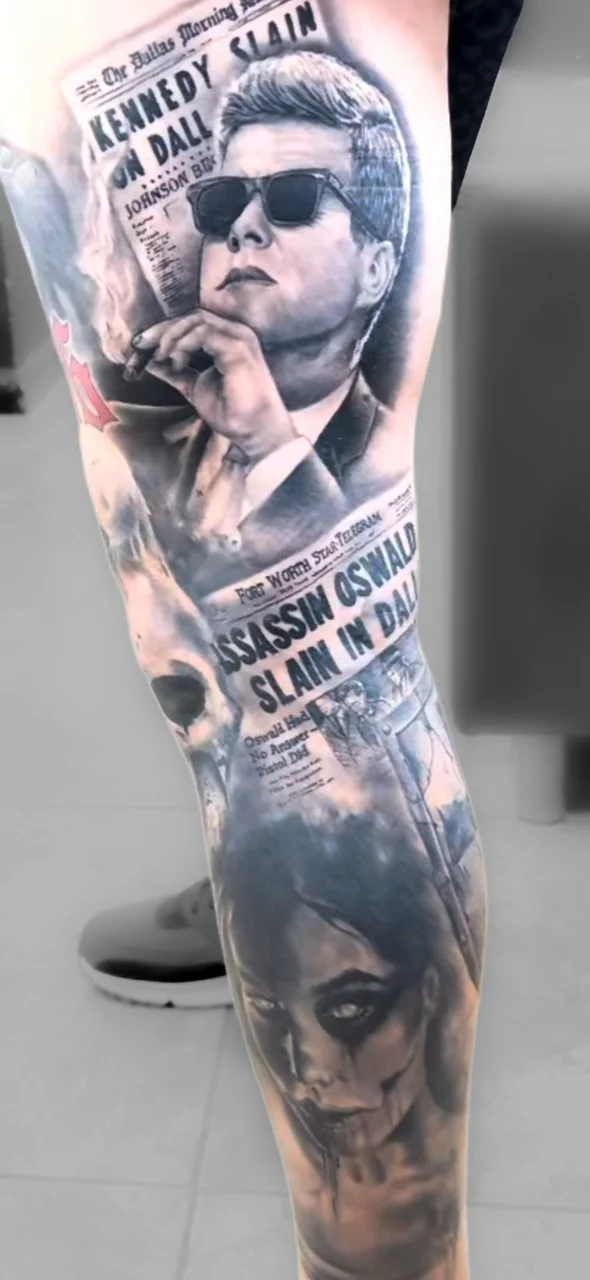
DESIGN AROUND MOVEMENT
Start with the main viewing angle. A portrait, animal or vertical symbol may face outward when the arm rests naturally. By contrast, a personal word or small symbol may face the wearer.
Next, consider where the design feels widest and where it should taper. The composition can echo the arm's shape rather than ending as a hard rectangle.
For example, leaves, smoke, fabric, clouds and ornamental elements can guide the eye around the forearm. Still, background elements should support the focal point instead of hiding it.
Finally, turn the arm during stencil review. A strong forearm tattoo should remain intentional from several common angles, even though one angle will usually be primary.
MATCH THE STYLE TO THE PROJECT
Most established tattoo styles can work on a forearm when the artist adapts the composition, contrast and line spacing to the available area.
Black and gray, realism-inspired subjects and fine-line pieces can use the forearm's length for controlled detail. However, enough size and open space are still necessary.
Traditional, neo-traditional, blackwork and color tattoos can create a strong silhouette that reads across the room.
Therefore, choose the artist by the final style, not simply by who has tattooed a forearm before. Compare portfolios for similar subject matter, scale and placement.
COMFORT VARIES BY PERSON
There is no single pain score that predicts your appointment. Pain is personal, and the exact surface, session length and technique matter.
The wrist, elbow crease and areas close to bone may feel sharper. Meanwhile, the broader center forearm can feel different from those edges.
Session length also changes the experience. A small symbol may finish quickly, while a detailed piece requires more passes, shading or color packing. Therefore, prepare for the complete project rather than relying on one universal pain number.
Use the Tattoo Pain Scale as general guidance, then discuss breaks and timing with your artist.
DETAIL DETERMINES THE SCHEDULE
The schedule depends on size, detail, style, color, placement, drawing needs, skin response and the artist's working process.
First, a small, simple design can often be completed in one visit. In contrast, a full inner-forearm composition or wraparound piece may require a longer booking.
Also, large color work and layered black-and-gray projects may be divided into stages. That plan can protect quality and make the appointment more manageable.
For an accurate estimate, provide the subject, approximate dimensions, body-side photograph and reference images. Then, the shop can match the request with the appropriate artist and session type.
THINK ABOUT DAILY LIFE
Usually, long sleeves can cover much of the forearm. However, wrist-level artwork may show when sleeves move, and some fitted fabrics can reveal the outline or lower edge.
Workplace rules differ. Therefore, check the policy that applies to your job instead of assuming every long sleeve solves the issue.
Sun exposure also matters because forearms are uncovered often in San Antonio. After healing, practical sun protection can help reduce unnecessary fading and contrast loss.
If visibility is a concern, test the stencil with your normal work clothes. In addition, compare an inner placement with an outer placement before making the final choice.
ARRIVE READY TO PLAN
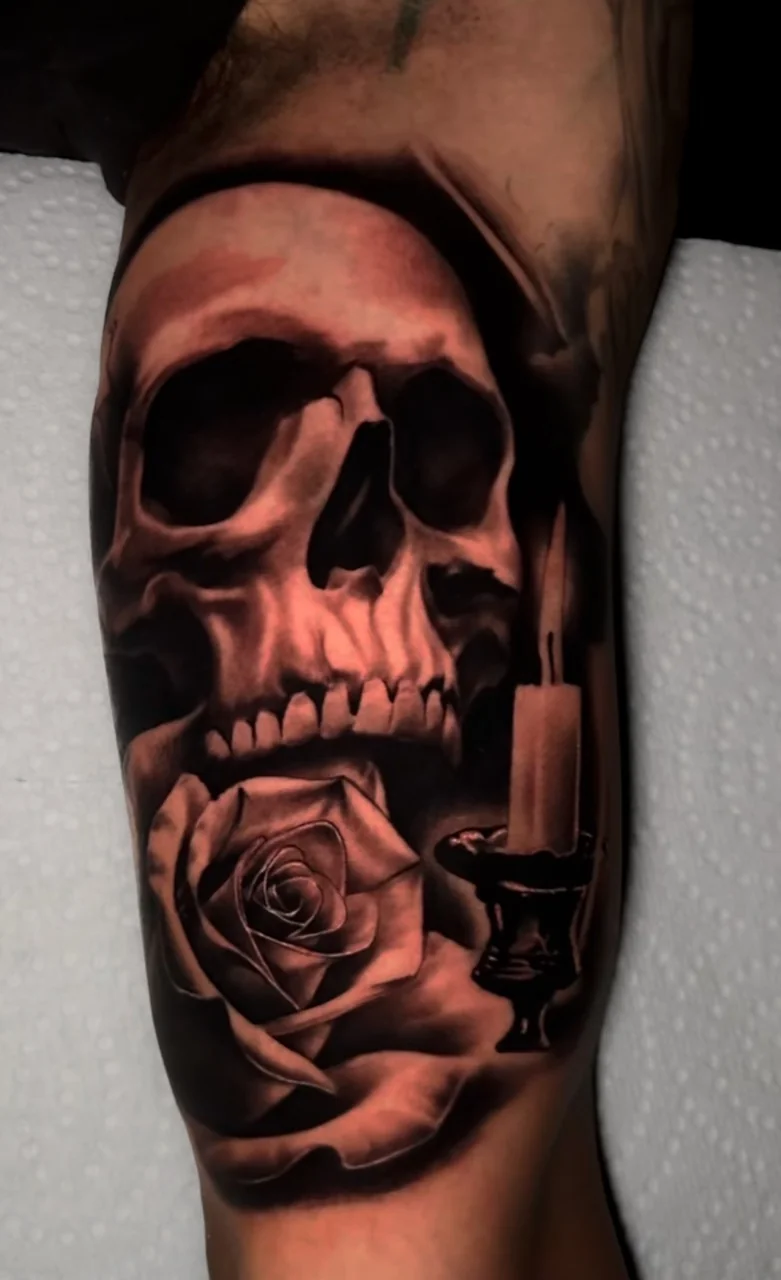
COMPARE REAL VISUAL DIRECTIONS
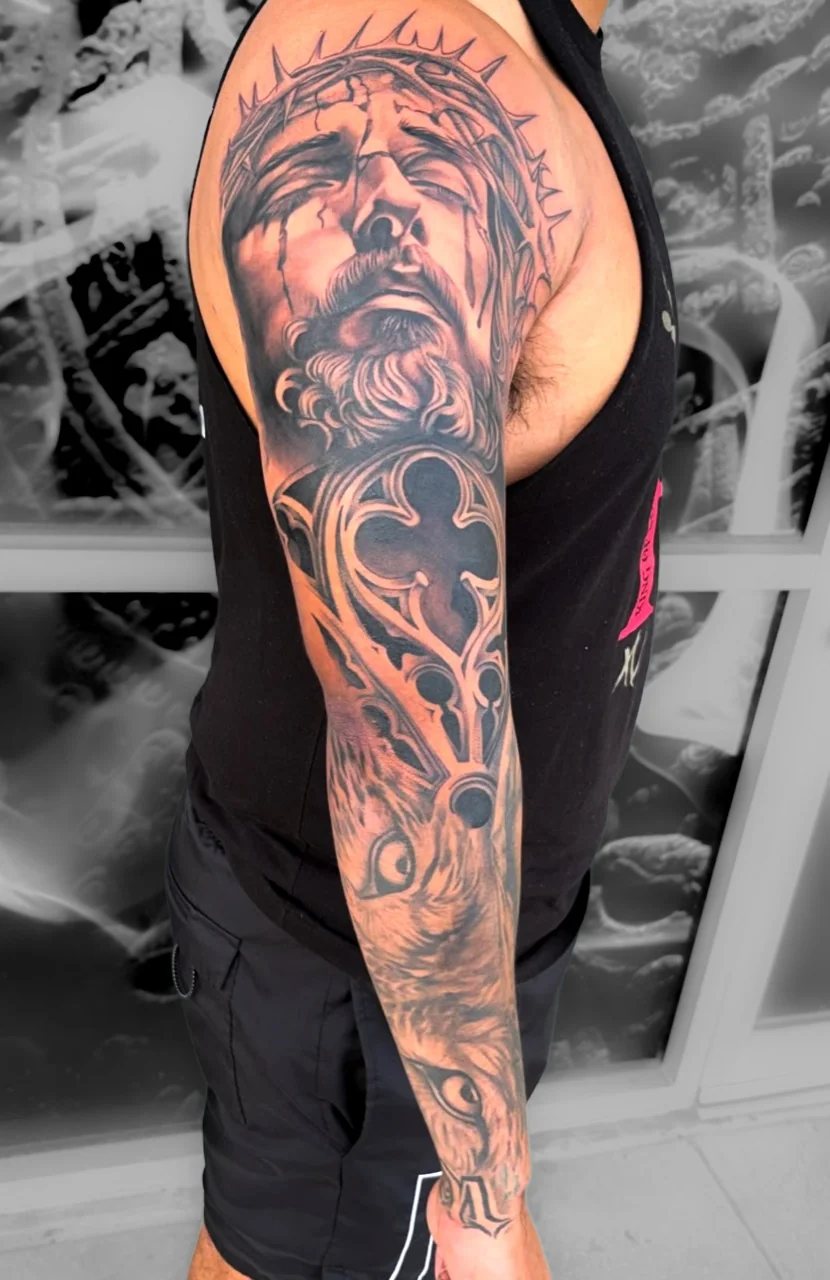
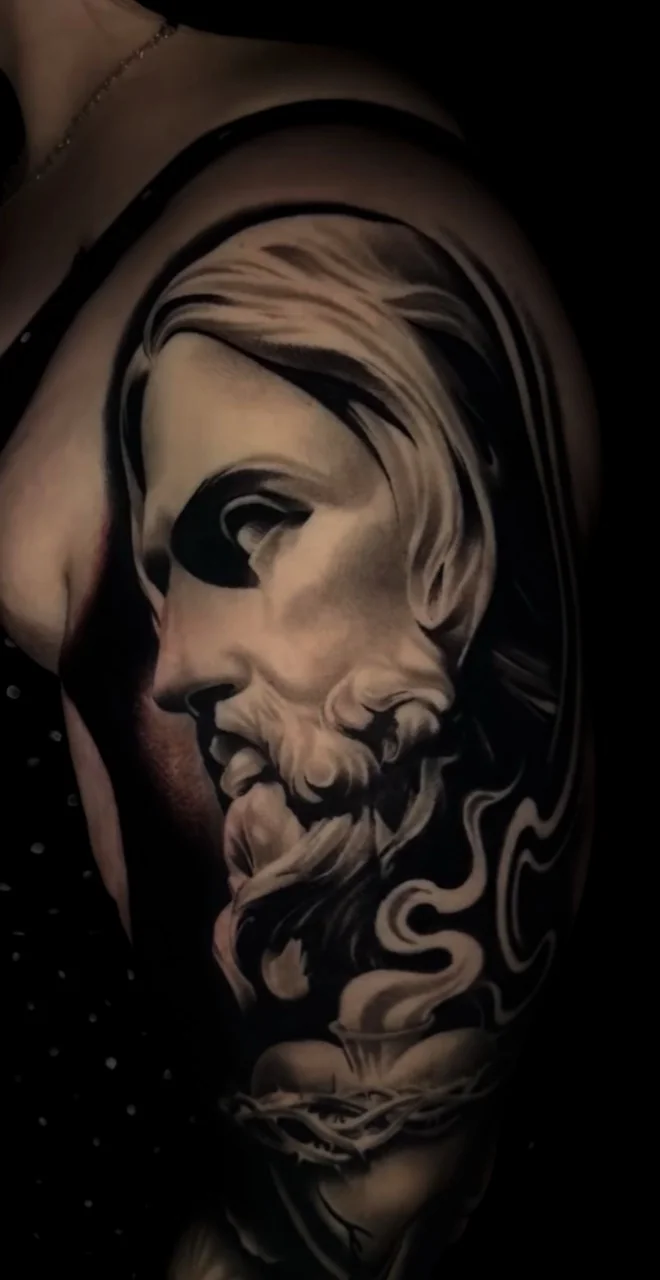
Use portfolio work to compare boldness, spacing, color and composition. Then, ask an artist to adapt the direction to your subject and forearm.
PROTECT THE FRESH TATTOO
Follow the artist's instructions for the bandage, washing and products. Different bandage systems have different timing, so the directions provided for your tattoo come first.
Next, keep the area clean and avoid rubbing it against dirty surfaces. Also, choose loose clothing that does not repeatedly scrape the fresh tattoo.
During healing, avoid soaking and do not pick flakes or scabs. Meanwhile, protect the area from unnecessary sun exposure.
After the tattoo settles, continue basic skin care and sensible sun protection. For skin reactions or changes, seek advice from a qualified clinician. The American Academy of Dermatology’s tattooed-skin guide explains when to contact a dermatologist.
FOUR SAN ANTONIO TATTOO SHOPS
Start with the FIRME COPIAS location closest to you. Artist schedules and specialties vary, so the team can help match your forearm project with the right portfolio and availability.
1132 Rayburn Drive
San Antonio, TX 78221
1806 SW Loop 410
San Antonio, TX 78227
10520 Culebra Road, Suite 4
San Antonio, TX 78251
1802 N Loop 1604 E, Suite 103
San Antonio, TX 78232
All four FIRME COPIAS locations are open daily from 9:00 AM until 2:00 AM.
AVOID COMMON PLANNING ERRORS
To avoid these problems, share the full idea before the session. Then, compare the artist's relevant work and listen to recommendations about size, shape and placement.
In addition, approve the final spelling, details and stencil position carefully. A deliberate review takes minutes and protects a permanent decision.
If this is your first tattoo, bring your questions to the consultation. For a realistic quote, use the San Antonio Tattoo Cost Guide.
STRAIGHT ANSWERS BEFORE YOU BOOK
Either can work. The outer forearm is highly visible and often supports bold shapes, while the inner forearm offers a flatter, more personal viewing surface. Choose the side that fits the design, visibility and comfort you want.
The answer depends on the main viewer and the subject. Portraits and figures often face outward when the arm rests naturally, while personal words or symbols may face the wearer. Approve the direction on your actual arm.
Yes. Tell the artist about future sleeve plans before the first stencil is placed. Strategic edges, spacing and orientation can leave better options for connecting the forearm piece to later upper-arm artwork.
The best size is the smallest scale that keeps every important line, letter and value change readable. Detailed subjects need more room than simple symbols, so the artist should test the design on your forearm.
Long sleeves cover most forearm tattoos, although wrist-level artwork may show when clothing moves. Check your workplace policy and test the planned placement with the clothes you normally wear.
Cost depends on size, detail, style, color, artist and expected session time. An in-person or photo-supported consultation gives a more accurate quote than the placement name alone.
A small simple design may take one short visit, while detailed, wraparound or color work may need a longer appointment or multiple sessions. The artist can estimate timing after reviewing the final concept and size.
Pain varies by person, technique and exact placement. Discuss the wrist, elbow crease and planned session length with your artist, and ask how breaks will be handled.
Simple forearm tattoos may work as walk-ins when the correct artist and enough time are available. Larger custom pieces, detailed work and wraparound designs usually benefit from a planned appointment.
Compare portfolios for the style, subject, scale and arm placements closest to your idea. Then, share your references and future plans so FIRME COPIAS can help match the project with the right artist.
BUILD THE RIGHT PLAN BEFORE THE STENCIL
Bring your subject, style references, preferred arm and approximate size. Then, FIRME COPIAS can help you choose the right placement, artist and San Antonio location for the work.