
Why Tattoo Size Matters More Than You Think
Tattoo size isn’t just about inches — it affects detail, longevity, placement, healing, and even how your design ages ten years from now. A piece that looks perfect at 2 inches on Pinterest might blur, crowd, or lose clarity on real skin. On the flip side, going too large for the placement can throw off proportion and body flow.
At Firme Copias, one of the most common adjustments artists make during a consultation is resizing artwork. Not because the design is wrong — but because skin isn’t paper. It stretches, moves, and changes over time. The right size ensures your tattoo keeps its edge and readability long after it heals.
If you’re planning a custom piece, especially something detailed like portrait work or layered shading, browsing our realism tattoo portfolio can give you a visual sense of how scale impacts clarity and depth. Larger canvases allow for finer gradients, smoother blending, and stronger long-term results.
Tattoo Size Breakdown
When people ask, “Is this considered small?” they’re usually looking for context. Inches alone don’t mean much until you visualize them.
Below is a practical breakdown used in studios when planning designs.
Extra Small Tattoos (1–2 Inches)
| Size reference: • About the size of a quarter (1″) • Roughly the width of two fingers (2″) |
Best for: • Tiny symbols • Minimal linework • Initials • Micro fine-line designs |
Common placements: • Behind the ear • Finger • Inner wrist • Ankle |
Extra small tattoos work best when the design is simple and bold. Thin lines, tight script, and excessive detail at this size can blur faster over time as ink naturally spreads beneath the skin.
If you’re considering script at this scale, it’s worth reviewing examples from our lettering tattoo page to see how spacing and line thickness are adjusted for longevity.
Small Tattoos (2–4 Inches)
| Size reference: • Credit card length (~3.5″) • Palm-sized (~4″) |
Best for: • Short quotes • Florals • Small illustrative designs • Minimalist black & grey work |
Common placements: • Forearm • Collarbone • Shoulder blade • Outer calf |
This range is often the sweet spot for first-time clients. It’s large enough to hold moderate detail while staying subtle and manageable. At 3–4 inches, artists can introduce light shading and contrast without overcrowding the design.
For fully customized pieces in this range, clients usually start with a consultation through our custom tattoo design process, where we resize the stencil directly on your body before any ink is placed. That fitting stage makes a major difference in proportion.
Medium Tattoos (4–6 Inches)
| Size reference: • About the length of a standard smartphone • Roughly the width of a hand |
Best for: • Floral clusters • Animal portraits • Medium script pieces • Mandalas • Symbol + shading combinations |
Common placements: • Outer forearm • Upper arm • Shoulder cap • Calf |
The 4–6 inch range gives artists room to breathe. At this size, linework can stay clean, shading can transition smoothly, and smaller details won’t crowd each other. This is where tattoos begin to hold real dimension.
If you’re thinking about something more intricate — especially portrait or realism work — this size range allows stronger contrast and smoother gradients. You can browse examples on our realism tattoo page to see how scale directly impacts depth and clarity.
For many clients, this range balances visibility, detail, and session time. It’s large enough to make a statement without committing to a multi-session project.
Large Tattoos (6–10+ Inches)
| Size reference: • Half forearm length (6–8”) • Full forearm or thigh panel (8–12”) |
Best for: • Portraits • Detailed realism • Large script pieces • Cover-ups • Complex compositions with background elements |
Common placements: • Full forearm • Thigh • Upper back • Chest panel |
Larger tattoos unlock creative freedom. Background textures, shadow depth, layered elements, all become possible without compressing the design. This is especially important for cover-up tattoos, where the new design must be large enough to effectively mask existing ink. If you’re correcting or reworking an old piece, reviewing our cover-up tattoo work can show how size expansion plays a strategic role.
Larger tattoos also require longer sessions. That doesn’t necessarily mean more pain — but it does mean more endurance. Session length, skin sensitivity, and placement all work together.
When clients come in asking for a highly detailed piece at 3 inches, artists will often recommend scaling up. Not to increase cost, but to protect the artwork long-term.
How Tattoo Size Affects Price
This is the question everyone thinks about, even if they don’t say it out loud.
Tattoo pricing is typically based on time, complexity, and placement, not just inches. Two tattoos of the same size can cost very different amounts depending on detail level and technique.
Here’s what influences price:
- Design complexity – Fine detail takes longer to execute
- Shading vs linework – Smooth gradients require more time
- Color vs black & grey – Color packing increases session length
- Placement difficulty – Ribs, hands, and feet require more precision
- Cover-up work – Requires layering and strategic design adjustments
There’s also a common misconception: very small tattoos are cheap. In reality, most professional studios have a minimum price to cover setup, sterile equipment, and artist time — even if the tattoo is only 1 inch.
If you’re unsure what size fits your budget, the best move is scheduling a free tattoo consultation. At Firme Copias, artists measure the placement, adjust sizing on your body, and give you realistic time estimates before you commit.
That transparency prevents surprises, and helps you plan correctly from the start.
Tattoo Size & Placement Compatibility: What Fits Where?
A tattoo can look perfect on paper and completely different once placed on the body. Size and placement work together. The natural curves of your arm, the width of your wrist, or the length of your thigh all influence how a design reads from a distance.
During consultations at Firme Copias, artists don’t just measure inches — they check proportion. A 4-inch design on one client’s forearm may look balanced, while the same design could feel cramped or oversized on someone else.
Here’s a practical breakdown:
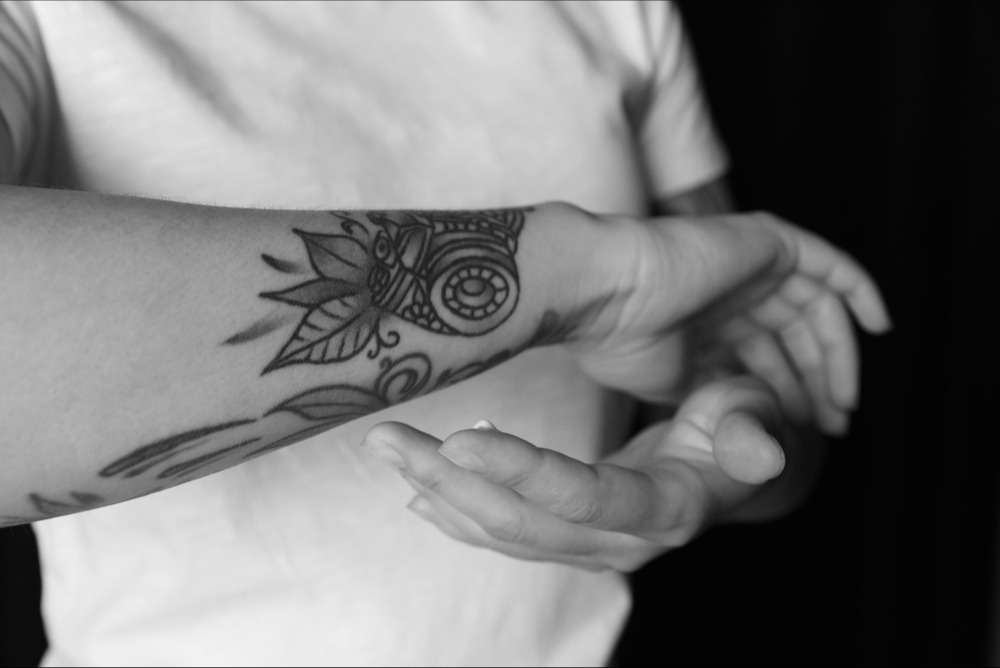
Arm Placement Guide
Wrist: 1–3 inches
Best for symbols, small script, minimalist designs.
Inner / Outer Forearm: 3–6 inches
Great for medium script, florals, animal heads, illustrative pieces.
Full Forearm Panel: 8–12 inches
Ideal for detailed realism, layered compositions, or extended lettering.If you’re considering script, placement matters even more. Script that wraps too tightly around the wrist can distort as the skin moves. Reviewing our lettering tattoo work can help you see how spacing and curvature are planned before the stencil goes on.
Leg Placement Guide
Ankle: 1–3 inches
Works best for small, bold linework.
Calf: 4–8 inches
Perfect for portraits, florals, or symmetrical designs.
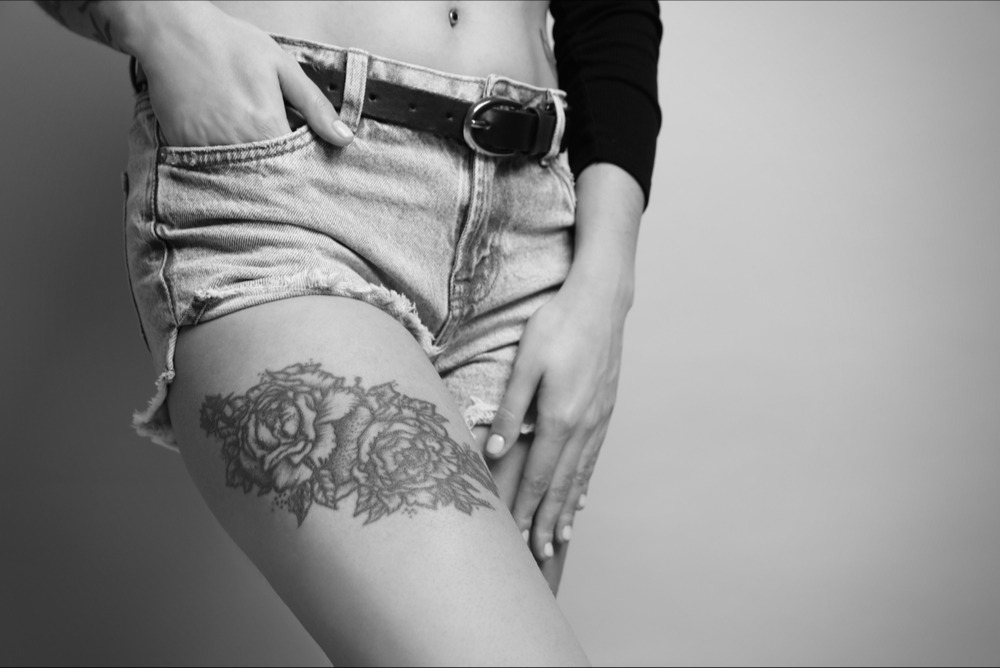
Thigh: 6–12+ inches
One of the best canvases for high-detail realism or large custom compositions.The thigh and upper leg areas allow more surface area and less distortion, which is why many realism pieces from our custom tattoo portfolio are placed there.
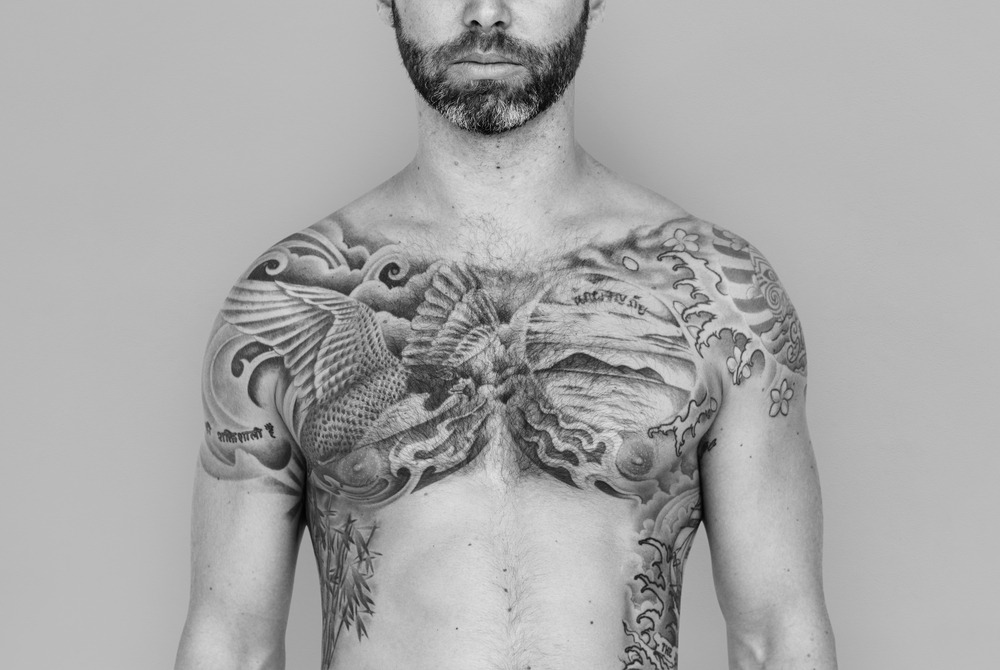
Chest, Back & Rib Placement
Upper Chest / Collarbone: 3–6 inches
Popular for script and symbolic designs.
Full Chest Panel: 8–14 inches
Strong canvas for symmetrical or bold work.
Back: 10 inches and beyond
The back offers the largest uninterrupted canvas on the body — ideal for portraits and multi-element pieces.
Ribs: Size varies, but detail must be simplified
Ribs move constantly with breathing. Extremely small, tight lettering here can blur faster over time.
Artists will sometimes recommend increasing size slightly on ribs or collarbone placements to protect readability. It’s a long-term decision, not a short-term one.
How Tattoo Size Impacts Longevity
This is where most blogs stop short — but it’s one of the most important factors.
Ink naturally spreads slightly beneath the skin over time. That’s normal. What determines how noticeable it becomes is spacing and line thickness.
Here’s what affects longevity:
- Thin, tightly packed lines blur faster
- Micro script can close in on itself
- Small negative space disappears first
- High-contrast designs age better
A 1-inch portrait will not age like an 8-inch portrait. There simply isn’t enough room for stable detail at micro scale.
This is especially important when planning a cover-up tattoo. If an old piece is being masked, the new design must be large enough to overpower the previous ink. You can see how scale plays a strategic role in our cover-up work examples.
Sometimes upsizing by just one inch makes the difference between a tattoo that lasts decades and one that needs correction in a few years.
Tattoo Size & Pain: What Actually Changes?
Many people assume bigger tattoo equals more pain. That’s not entirely accurate.
Pain depends more on placement than size. A tiny tattoo on the ribs can hurt more than a medium tattoo on the outer thigh.
What size does influence is session length.
- Small tattoo = shorter exposure
- Medium tattoo = steady discomfort
- Large tattoo = endurance challenge
As sessions extend, skin becomes more sensitive. Fatigue sets in. That’s why large pieces are often broken into multiple sessions.
For first-time clients unsure what to expect, scheduling a consultation at Firme Copias allows artists to walk through placement options and session pacing so you’re prepared before the needle touches skin.
Understanding this ahead of time reduces anxiety and helps you choose a size you can realistically sit through.
How to Choose the Right Tattoo Size
If you’re stuck between “go small” and “go bold,” use this step-by-step approach before locking anything in.
1. Define the Design Complexity
Is it:
- A simple symbol?
- A short word?
- A portrait?
- A layered composition with background elements?
The more detail involved, the more space it needs. Trying to compress realism into 2 inches usually leads to loss of clarity. When clients come in wanting portrait-level detail, artists often recommend scaling up after reviewing reference images during a custom tattoo consultation.
2. Choose Placement First — Then Size
Your body determines your boundaries. A design that looks proportional on your thigh may look oversized on your wrist.
During your appointment at Firme Copias, artists place a stencil on your body so you can see the actual size in real time. That physical preview removes guesswork and helps you adjust before committing.
3. Think 10 Years Ahead
Ask yourself:
- Will the lines still be readable?
- Will small negative spaces close?
- Does the design have breathing room?
This is especially important for script. An expert tattoo artist will help to adjust spacing and line weight for durability.
4. Consider Future Additions
Planning a sleeve later? Starting small in the wrong spot can disrupt future flow.
Many sleeve projects at Firme Copias begin with a medium-to-large anchor piece that leaves room for expansion. If long-term layout matters to you, mention it during your consultation so the size fits your future vision.
5. Be Open to Artist Adjustments
Clients sometimes walk in set on a specific measurement — “exactly 3 inches.” But proportion beats precision.
Artists may suggest:
- Increasing size slightly for readability
- Adjusting width to fit muscle contours
- Simplifying details if keeping it small
That collaboration protects your investment.
Common Tattoo Sizing Mistakes to Avoid
These are patterns artists see repeatedly.
| 1. Going too small for detailed designs Portraits and hyper-detailed florals need space. If they’re too compact, they age poorly. |
2. Copying online measurements without body comparison A 4-inch tattoo looks different on every person. |
3. Forgetting how placement affects visibility Wrist tattoos appear smaller than the same size on the forearm because of visual framing. |
4. Ignoring cover-up requirements A cover-up must exceed the size of the original tattoo. You can explore examples of how size expansion is used strategically in our cover-up tattoo work. |
5. Choosing size based purely on cost Downsizing a design just to lower price can compromise long-term quality. |
FAQ
Is 3 inches considered small?
Yes. It falls into the small range. It works well for simple designs but may not hold heavy detail.
Do small tattoos fade faster?
They don’t necessarily fade faster — but tight lines can blur more noticeably over time due to ink spread.
What’s the best size for script?
Most readable script pieces land between 3–6 inches, depending on word count and placement. An extremely small script often requires thicker linework to stay legible.
Can I resize a tattoo design before my appointment?
Yes. During your consultation, artists can scale and fit the stencil directly on your body so you see the actual proportions.
How do artists measure tattoo size?
Size is typically measured by the longest edge (height or width). However, proportion matters more than exact measurement.